
AI Consulting for Marine Logistics in Fort Lauderdale
Agentic AI systems built for Port Everglades freight forwarders, customs brokers, and regional logistics operators. Production deployments, not pilots.
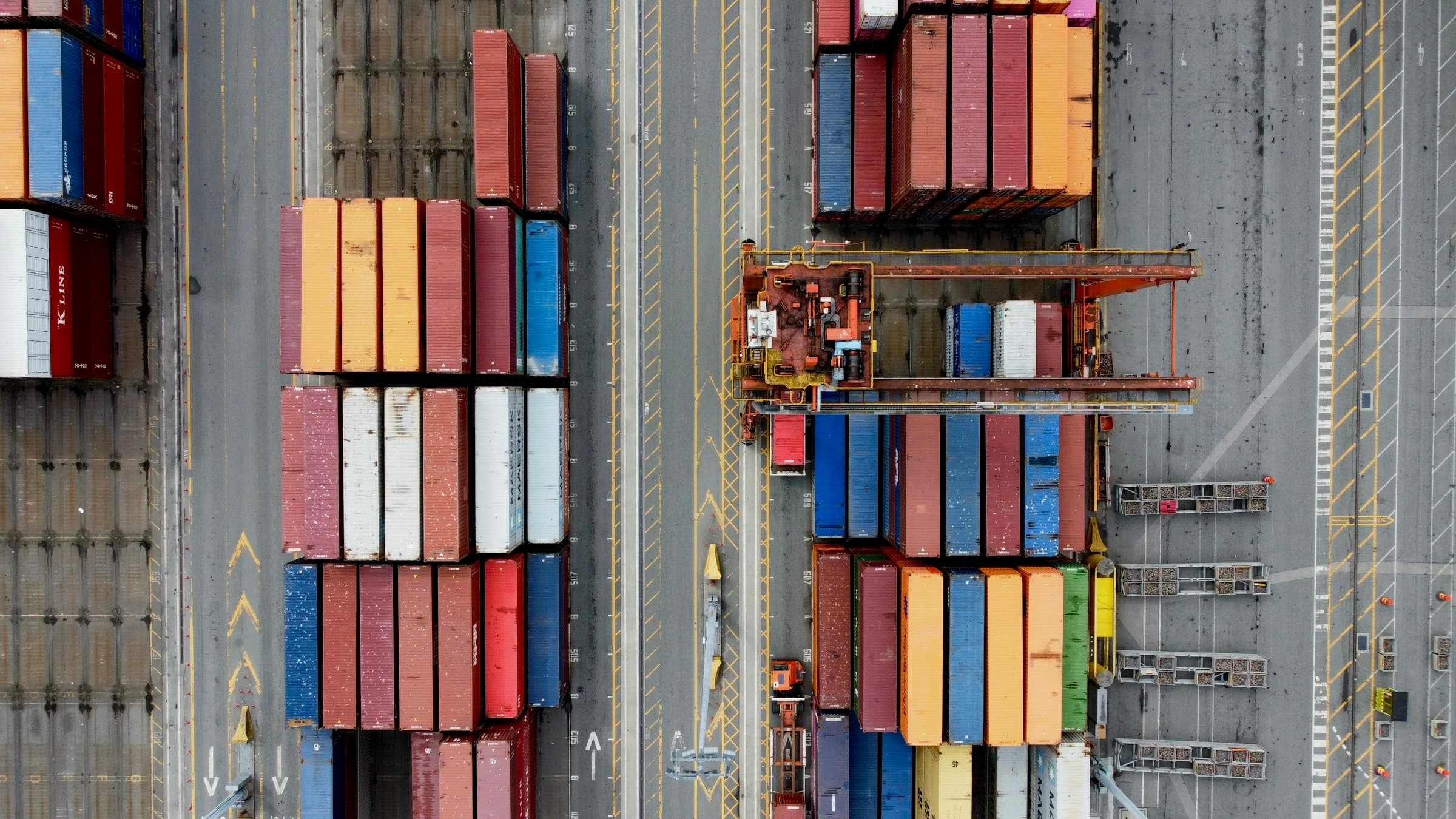
Photo by Daniel Miksha on Unsplash
The operation you run is more complex than the tools you have
Fort Lauderdale's marine logistics operators run on cognitive load that should not be cognitive load. Port Everglades handled a record 1,167,552 TEUs in Fiscal Year 2025 — the equivalent of more than 3,000 containers moving through the port every day. Every one of those containers touches five to eight parties and a dozen or more compliance documents. Customs entries, bills of lading, certificates of origin, Section 301 tariff flags, FDA prior notices, CAFTA-DR verifications — the regulatory surface area alone consumes hours per shipment of operations staff time that could be recovered.
Most Fort Lauderdale operators already know the inefficiency exists. The harder question is which tools actually fix it, and which are marketed as fixes but don't survive contact with real freight forwarding work.
Agentic AI is the first category of tool that genuinely fixes it. Not because it's new, and not because the vendors say so, but because the class of work — rule-bound, multi-step, multi-system, multi-lingual, unforgiving of errors — is exactly what current-generation AI agents are architected to handle.
FloridAI Agency builds and operates those agents for South Florida's marine logistics sector.
What we build for marine logistics operators
We work across three workflow categories where the operational return is measurable and the implementation risk is manageable.
Customs documentation and compliance filings
This is where most of our Port Everglades engagements start. CBP entry preparation, FDA prior notice filings for food and beverage imports, USDA APHIS documentation for agricultural shipments, Foreign Trade Zone admissions and withdrawals, and for Caribbean and Central American trade routes, CAFTA-DR origin verification. Each filing category has distinct documentation requirements, distinct formats, and distinct failure modes.
An agent handles this category well because the inputs are structured enough to parse, the rules are codified in federal regulation, and the outputs are well-defined. A customs broker who used to prepare four entries per day reviews and approves twenty. Judgment is applied where judgment matters. The rule-bound portion, which consumed the majority of the broker's time, is handled.
Shipment visibility and exception handling
Most Fort Lauderdale freight operators run shipment tracking across three or four disconnected systems: their TMS, carrier portals, terminal operator systems, and customer-facing track-and-trace. When a shipment is on schedule, the systems stay roughly in sync. When a shipment deviates, they don't, and your operations team spends hours reconciling.
We build agents that monitor all four data streams, detect deviations as they happen, determine whether the deviation requires customer communication or internal action, draft the appropriate outbound messages, and escalate to a human only when the exception is genuinely novel or high-stakes. For a regional freight forwarder handling 200 shipments a week, this typically recovers 30 to 40 percent of operations staff time.
Multilingual client correspondence
Fort Lauderdale's logistics economy is multilingual by default. Caribbean routes generate Spanish and Haitian Creole correspondence. European services produce French and Portuguese. Latin American trade runs almost entirely in Spanish. Most operators address this by hiring bilingual staff and accepting that communication quality degrades when the right language specialist is unavailable.
An agent equipped with current-generation language models reads incoming correspondence in any of these languages, drafts responses in the same language with your operational voice, and escalates to a human only when the communication requires a decision the agent isn't authorized to make. This is not a novelty. The underlying model quality has crossed a threshold in the last eighteen months where it is now credible for day-to-day business correspondence.
Duty drawback automation — a specific workflow worth naming
Duty drawback is one of the highest-value and most underutilized customs programs in U.S. trade. When goods are imported, duties are paid. When those same goods (or related manufactured goods) are subsequently exported, a portion of those duties can be refunded. Many freight forwarders and importers are leaving meaningful money on the table because drawback claims are administratively complex enough that they don't get filed.
Agentic AI changes the economics. An agent that maintains state across your import and export history, identifies eligible drawback scenarios automatically, prepares the supporting documentation, and files the claim with CBP turns a previously uneconomic manual process into a recurring revenue recovery stream. For operators running Caribbean re-export corridors or handling bonded warehousing, duty drawback automation can be a meaningful revenue recovery opportunity to evaluate in an early deployment.
Why FloridAI is the right partner for Fort Lauderdale marine logistics
Four things distinguish us from the alternatives.
We are local and accountable. Most AI consultancies servicing South Florida operate from outside the region — Canadian, Washington state, or offshore. Our office is at 1201 E Broward Blvd in Fort Lauderdale, fifteen minutes from Port Everglades. When you need a conversation in person, that happens. When there is a problem in production, we are in your timezone.
We are trilingual. We operate in English, Spanish, and French. This maps directly to the communication reality of Port Everglades freight operations. We do not treat multilingual capability as a feature to be added — we treat it as the default state of business in South Florida.
We build, not just configure. Our team operates production AI infrastructure of our own. When we recommend architecture to a freight forwarder, the recommendations come from people who run AI systems in production every day, not from a team reselling vendor software. The architectural depth is a real differentiator.
We take security seriously. An agent with access to your CBP filing credentials, your carrier APIs, and your client communication systems is a high-value target. The n8n security incidents of early 2026 made this concrete for the entire industry. We implement with credential isolation, access controls, and monitoring from day one, not as a retrofit. More on our approach in our analysis of the n8n security breach and what it means for your automation stack.
How an engagement actually works
We do not sell pilots, proofs of concept, or open-ended engagements that never reach production. Our engagements are structured to produce running systems on specific timelines.
Week 1-2 — AI Transformation Assessment ($5,000-$10,000). We map your operational workflows, identify the highest-return automation candidates, and deliver a concrete roadmap with ROI projections. Paid engagement, not free consultation. Detail on our Services page.
Week 3-6 — First agent design and build. We design and build one agent end-to-end, typically customs entry preparation or shipment exception monitoring. We do not try to automate everything at once. We prove value in one workflow first.
Week 7-10 — Integration and production deployment. We integrate with your existing systems — TMS, CBP ACE, carrier portals, ERP — establish monitoring and security controls, and train your team on the handoff points between agent judgment and human judgment.
Month 4 onward — Managed AI Operations. The agent runs in production. We monitor, tune, and extend to the next workflow.
A complete first deployment typically runs $15,000 to $50,000 depending on workflow complexity. The return comes from reclaimed operations hours, reduced filing errors, and faster exception resolution. The operators who move first build a structural cost advantage that compounds.
Frequently Asked Questions
How long does it take to deploy an AI agent for freight forwarding workflows?
A first production agent handling a single workflow — customs entry preparation, shipment exception monitoring, or multilingual correspondence — typically runs 6 to 10 weeks from kickoff to production. The timeline is driven more by integration with your existing systems than by the agent build itself. We do not ship pilots. The first deliverable is a production system.
Will an AI agent work with our existing TMS, CBP ACE, and carrier portals, or do we need to replace them?
We build around your existing stack. Replacing a TMS or ERP during an AI implementation is a failure mode we actively avoid — it compounds risk and delays value. Our agents integrate with the systems you run today through APIs, file-based interfaces, or, where necessary, browser-based automation. The goal is to multiply your operations team's output, not to re-platform your business.
How do you handle customs filings where the agent's classification could trigger a Section 301 or Section 232 tariff?
Those classifications do not get delegated to the agent. The agent prepares the filing, identifies the tariff implication, and routes to your human customs broker with the relevant context. High-stakes regulatory decisions stay with licensed professionals. The agent's job is to handle the rule-bound work and make the judgment calls visible, not to replace them.
We tried a Zapier or Make.com workflow for some of this. Why is agentic AI different?
Zapier and Make are excellent for deterministic workflows — if X happens, do Y. They fail at workflows that require judgment, context, or handling ambiguity. A customs entry with an incomplete commercial invoice, a shipment exception that could be either a carrier delay or a port congestion event, or a multilingual message from a consignee asking about a specific bill of lading — these are not if-then problems. An AI agent reasons about the context and takes the appropriate action. Agents and deterministic automation often coexist. They solve different problems.
Ready to evaluate agentic AI for your operation?
If your Fort Lauderdale freight forwarding, customs brokerage, or marine logistics operation is absorbing hours of manual work on filings, reconciliations, and multilingual correspondence that should be running on software, the next step is an AI Transformation Assessment. A focused, paid engagement where we examine your workflows and deliver a concrete roadmap.
Not a sales pitch. A $5,000 to $10,000 deliverable that tells you what to do, whether we are the right partner to do it, and what the realistic payback looks like.
Book an AI Transformation Assessment
A focused, paid engagement. We examine your workflows and deliver a concrete roadmap with ROI projections.