
Customs, Containers, and Cognitive Load: Where AI Agents Fit in South Florida Logistics
Port Everglades and the Port of Miami move more freight each week than most logistics operators can scale to handle. Here's where agentic AI meaningfully cuts overhead — and where it doesn't.
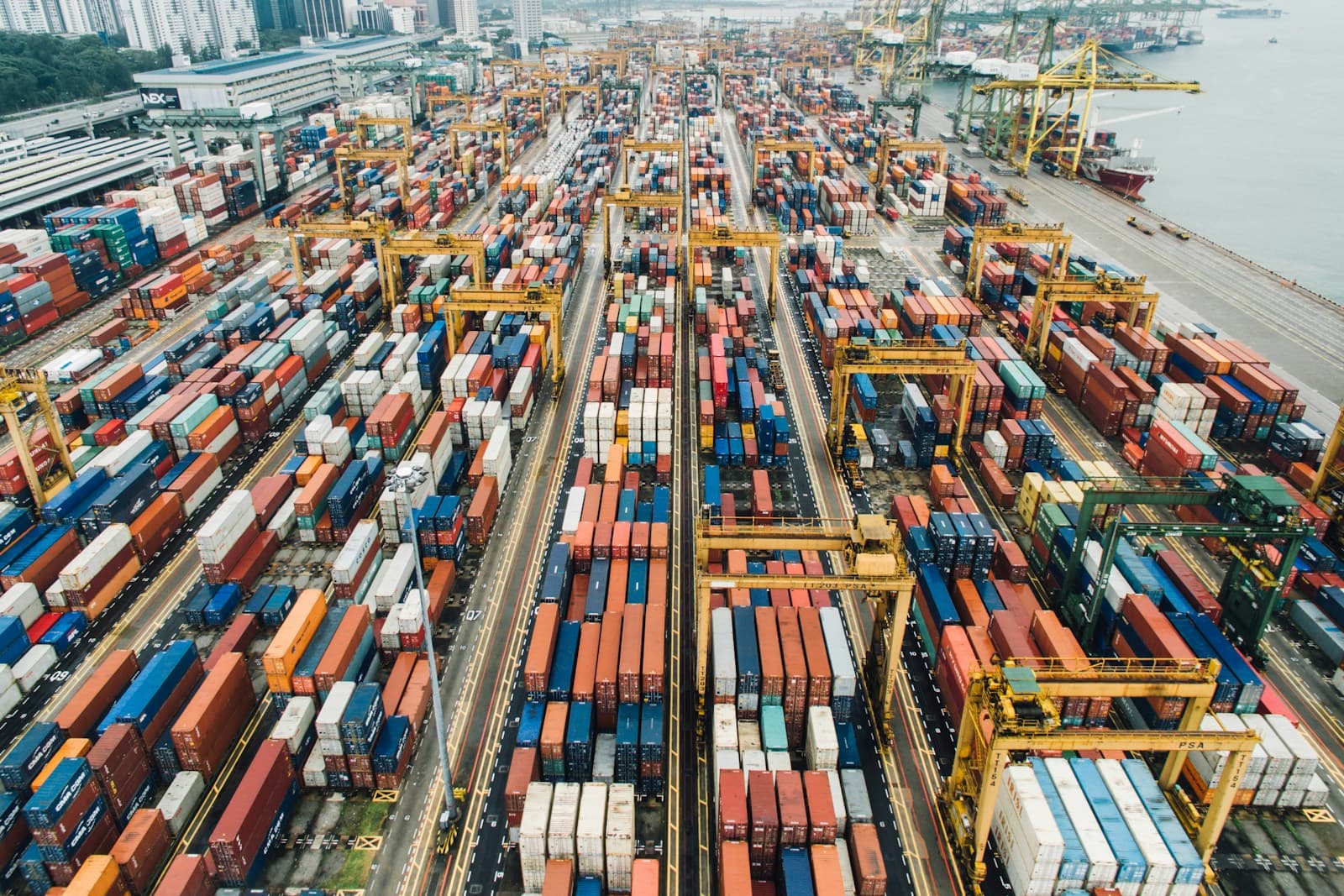
Port Everglades handles more than a million TEU (twenty-foot equivalent units) annually. The Port of Miami, a few miles south, handles more than a million and a half. Together they move freight for Caribbean trade routes, Central and South American corridors, European container services, and cruise logistics for the busiest passenger ports in the world.
That volume does not move itself. Behind every container is a stack of paperwork: commercial invoices, bills of lading, certificates of origin, customs entry filings, freight forwarder communications, carrier notices, and in many cases, correspondence across three or four languages. Behind every shipment that moves smoothly is an operations team doing cognitive work that a human simply should not have to do — the kind of work that is rule-bound, repetitive, multi-step, and unforgiving of errors.
This is the exact shape of work that agentic AI is built for.
Let me be specific about what that means, because "AI for logistics" has become a saturated phrase that covers everything from predictive analytics to chatbots that answer shipment status questions. Those are real applications, but they are not what we mean when we say agentic AI.
What an agent actually does in a logistics workflow
An AI agent, in the useful sense, is a system that perceives its environment (documents, emails, ERP data, carrier APIs), reasons about what needs to happen next, acts autonomously across multiple systems, and learns from the outcomes. It does not require a human to click a button at each step. It does not require a rigid if-this-then-that rule set. It handles ambiguity the way a trained operations specialist would — by weighing context and making judgment calls.
Here is a concrete example drawn from freight forwarding work.
An ocean container arrives from Rotterdam with a mixed commercial invoice — electronics, machine parts, and a small consignment of textiles, each destined for different consignees in the South Florida tri-county. Customs entry requires three separate filings. Each filing requires different Harmonized Tariff Schedule (HTS) classifications, different countries of origin documentation, and different duty calculations. The freight forwarder's customs broker typically handles this in two to four hours, depending on complexity and whether any of the documentation arrived incomplete from the shipper.
An agentic system processes the same shipment in under ten minutes. It reads the commercial invoice, classifies each line against the HTS, pulls country-of-origin documentation from the exporter's system, prepares three separate entry filings in the correct format for CBP's ACE (Automated Commercial Environment), flags the electronics consignment because one HTS code has a Section 301 tariff implication that changed in the last 30 days, drafts a question to the human customs broker about whether the client wants to file a duty drawback claim on a previous related shipment, and queues the filings for broker review.
The human customs broker, who used to do four of these per day, now reviews and approves twenty. Their judgment is applied at the points where judgment matters. The rule-bound portion of the work, which consumed the majority of their time, is handled.
This is the Perceive-Reason-Act-Learn loop applied to a real operational constraint. It is not a chatbot. It is not a scheduled report. It is an agent.
Three workflow areas where the return is measurable
Across the marine and logistics operators we have evaluated in South Florida, three areas consistently show the strongest return from agentic implementation.
Customs documentation and compliance filings
The regulatory surface area is enormous. CBP filings, FDA prior notices for food imports, USDA APHIS documentation for agricultural products, Foreign Trade Zone (FTZ) admissions and withdrawals, and for Caribbean and Central American routes, CAFTA-DR origin verification. Every category has a distinct documentation trail, a distinct filing format, and a distinct set of failure modes. Every filing error is a potential demurrage charge, detention fee, or held shipment.
Agentic systems handle this category particularly well because the inputs (commercial documents) are structured enough to parse, the rules (regulatory requirements) are codified, and the outputs (filings) are well-defined. The value is not in replacing the customs broker. It is in multiplying the broker's output and reducing the error rate to something approaching the theoretical minimum.
Shipment visibility and exception handling
Most logistics operators run shipment tracking through three or four systems: their own TMS (transportation management system), carrier portals, terminal operator systems, and customer-facing track-and-trace. When a shipment is on schedule, these systems are mostly in sync. When a shipment deviates — a vessel is delayed, a container is held at the port for inspection, a customs entry kicks back — the systems go out of sync, and the operations team spends hours reconciling them.
An agentic system monitors all four data streams, detects deviations, determines whether the deviation requires customer communication or internal action, drafts the appropriate outbound messages (in English, Spanish, Portuguese, or Haitian Creole depending on recipient), and escalates to a human only when the exception is novel or high-stakes. For a regional freight forwarder handling 200 shipments a week, this can recover 30 to 40 percent of operations staff time.
Multilingual client communication
South Florida's logistics industry is genuinely multilingual. Caribbean and Latin American trade generates Spanish correspondence. European services generate French and Portuguese. Haitian Creole is a daily reality for operators serving Hispaniola routes. Most operators address this by hiring bilingual staff and accepting that some communications will be delayed or degraded when the right language specialist is unavailable.
An agentic system equipped with current-generation language models reads incoming correspondence in any of these languages, drafts responses in the same language, maintains brand voice and operational accuracy, and escalates to a human only when the communication involves a decision the agent is not authorized to make. The quality of these models has crossed a threshold in the last eighteen months where they are now credible for business correspondence — not marketing copy, not legal filings, but the practical day-to-day back-and-forth that fills an operations inbox.
Where agentic AI does not belong in logistics
It is worth naming the categories where agentic AI is a bad fit, because the vendors who sell into this market have strong incentive to blur the distinction.
Agents should not make high-stakes regulatory decisions autonomously. A customs classification that could trigger a Section 301 tariff, a Section 232 steel tariff, or a trade remedy investigation is not a decision to delegate to software. The agent prepares the filing, flags the issue, and routes to a human with the context to judge.
Agents should not replace judgment calls on high-value exceptions. A held container worth $800,000 and a held container worth $8,000 both require exception handling, but the decision-making hierarchy is different. The agent's job is to categorize the exception and route appropriately, not to act unilaterally.
Agents should not be the security boundary. This is where the n8n breach story, which we covered earlier, matters for logistics operators specifically. An agent that has access to your customs filing credentials, your carrier APIs, your client communication systems, and your banking information is a high-value target. The security architecture around the agent — credential isolation, access controls, monitoring, incident response — is more important than the agent itself.
What a real implementation looks like
We have moved past the era where implementing agentic AI requires a machine learning team. Current platforms are mature enough that an experienced consulting team can deploy a working agent in weeks, not months.
A typical South Florida logistics engagement looks like this:
Week 1-2: We map your current operational workflows. Where does documentation enter? Where does it exit? Where are the handoffs between systems? Where are your team's hours actually being spent? This is the work that an AI Transformation Assessment is designed for.
Week 3-6: We design and build the first agent. It handles one workflow end-to-end — typically customs entry preparation or shipment exception monitoring. We do not attempt to automate everything at once. We prove value in one workflow first.
Week 7-10: We integrate the agent with your existing systems, establish monitoring and security controls, train your team on how to work alongside it, and document the handoff points between agent judgment and human judgment.
Month 4 onward: The agent runs in production. We monitor performance, tune the reasoning behavior based on real outcomes, and identify the next workflow to automate.
The scope and investment for a first agent deployment depends on the complexity of the workflow being automated and the systems involved. What we can say is that the return comes from reclaimed operations hours, reduced filing errors, and faster exception resolution — and that the businesses who move first build a structural cost advantage that compounds.
Why now
Two dynamics have converged to make this the right moment for South Florida logistics operators to evaluate agentic AI.
The first is that the underlying technology has crossed a reliability threshold. The reasoning quality of current-generation models, combined with mature orchestration frameworks, means agent behavior is now consistent enough for production use. Eighteen months ago, it was not.
The second is that the competitive window is short. Logistics is a margin-compressed industry. The operators who automate the rule-bound work first will run leaner and bid more aggressively. Those who wait will compete against operators with a structural cost advantage.
We built FloridAI specifically to be the implementation partner for businesses facing that transition. If your operation is running on cognitive load that should not be cognitive load — filings, reconciliations, multilingual correspondence, exception handling — there is a meaningful conversation to have about where agents fit in your specific workflows.
That conversation starts with an AI Transformation Assessment. A focused, paid engagement where we examine your operational surface area and deliver a concrete roadmap with ROI projections. Not a sales pitch, not a free discovery call — a $5,000 to $10,000 deliverable that tells you what to do, whether we are the right partner to do it, and what the realistic payback looks like.
If you run marine, logistics, or freight forwarding operations in South Florida and you have been asking the question of where AI actually fits in your business, we should talk.
Get more like this.
One monthly email. Substantive thinking on agentic AI for operationally complex businesses.
Ready to explore AI for your business?
Book a 30-minute AI Transformation Assessment. Mapped to your operations, modeled against your P&L.
You Paid Duty on Goods You Later Exported. CBP Refunds 99 Percent, and Most Importers Never Ask.
Duty drawback under 19 U.S.C. 1313 refunds up to 99 percent of duties, taxes, and fees on imported goods later exported or destroyed, yet most eligible claims go unfiled because manual entry-to-export matching is too labor-intensive to sustain.
Scope Creep Is Free Legal Work, and a Vague Engagement Letter Is How It Starts.
Florida Bar Rules 4-1.5 and 4-1.2 require specific written terms for fees and scope, yet most firms still draft engagement letters manually. An AI agent that generates scope-defined letters at intake and flags out-of-scope work as it accrues protects the fee and reduces disciplinary exposure.