
You Paid Duty on Goods You Later Exported. CBP Refunds 99 Percent, and Most Importers Never Ask.
Duty drawback under 19 U.S.C. 1313 refunds up to 99 percent of duties, taxes, and fees on imported goods later exported or destroyed, yet most eligible claims go unfiled because manual entry-to-export matching is too labor-intensive to sustain.
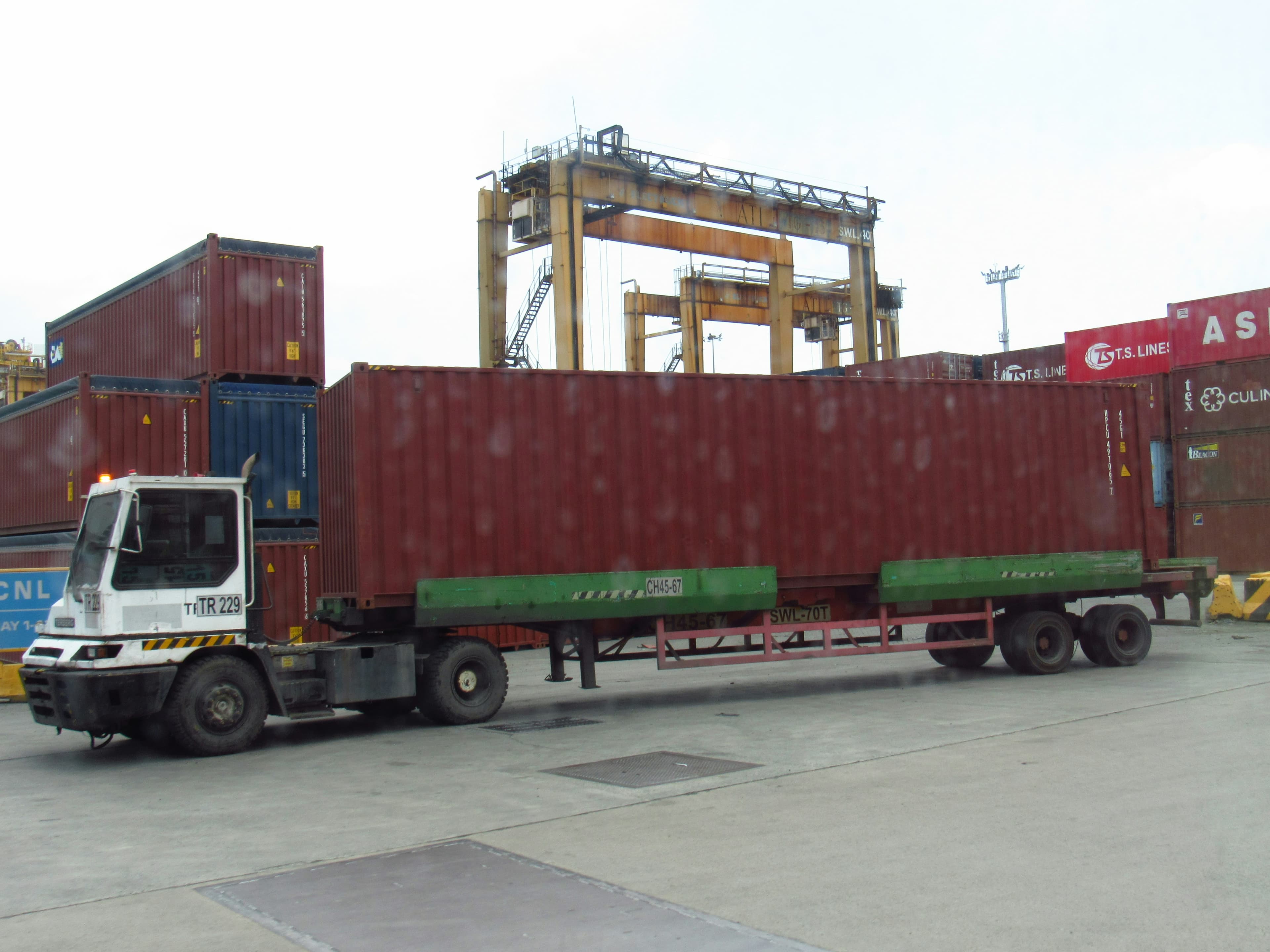
Photo: PortCalls Asia
Drawback is one of the few places in customs where the government writes you a check. If you imported goods, paid the duty, and later exported or destroyed them, you are owed back up to ninety-nine percent of what you paid. Most importers leave that money on the table because matching the import entries to the export records by hand is tedious enough that nobody does it.
I have come to believe this is one of the cleaner automation wins in the trade compliance space, and the reason it stays uncaptured is almost entirely operational, not legal. The statutory authority is clear. The filing mechanism exists. The five-year window is generous. What fails is the matching workflow.
And the window is closing on a rolling monthly basis. Entries from mid-2020 expire this summer. If nobody on your team has run a drawback eligibility review in the last 24 months, recoverable cash is disappearing on the calendar while you read this.
The statutory setup: 19 U.S.C. 1313 and what TFTEA changed
Duty drawback has existed in U.S. trade law since the Tariff Act of 1789. The version most importers encounter today was modernized by the Trade Facilitation and Trade Enforcement Act of 2015, with new rules taking effect in February 2018. TFTEA matters because it broadened substitution drawback to the HTS 8-digit level, so a manufacturer no longer needs to export the exact physical goods it imported. Commercially interchangeable substitutes qualify, as long as the HTS classification matches at eight digits.
Three claim types cover most operators: manufacturing drawback (imported materials used to make an exported finished product), unused-merchandise drawback (goods imported, never substantially transformed, then exported), and rejected-merchandise drawback (defective or nonconforming goods returned or destroyed under CBP supervision).
All three are filed through the Automated Commercial Environment drawback module (ACE). CBP processes the claim and issues a refund of up to 99 percent of the original duties, taxes, and fees. The one percent retained is the statutory floor rather than a penalty.
The five-year clock runs from the date of importation. That is a generous window, but it is not infinite. Import entries from 2020 that were never matched to an export event are expiring this year.
Sizing the prize before doing anything else
Before any vendor conversation or internal workflow build, an ops director needs an order-of-magnitude number. A distributor paying two million dollars annually in duties on a product mix where 30 percent of the volume is re-exported is leaving roughly $594,000 per year on the table at the 99 percent refund rate. Over an unfiled five-year window, that approaches three million dollars in recoverable cash. Scale the math up or down against your own duty spend and re-export ratio. If the answer is in the six or seven figures, the matching workflow is worth building. If it is in the low five figures, file a one-time catch-up claim through a broker and stop there.
Import entry retrieval and recordkeeping gaps
The first place this breaks down is data access. An importer operating out of Port Everglades or Miami International Airport may have cleared goods through three different customs brokers over a five-year period, each maintaining entry records in a different format. CBP's ACE portal gives importers access to their own entry data, but extracting it, normalizing it, and cross-referencing it against internal inventory or sales records is manual work.
The recordkeeping requirements under 19 C.F.R. Part 163 require importers to retain entry records for five years from the date of entry. In practice, the records exist. They are in broker portals like Descartes or CargoWise, in shared drives, in ERP exports from NetSuite or SAP. The problem is structural: nobody assigned the job of mapping those records to export events, because the job looks thankless and the upside is invisible until someone runs the numbers.
Export record matching against the import entry universe
Here is where the actual labor lives. A drawback claim requires demonstrating that a specific export (documented through a bill of lading, an EEI filing in AES, or a destruction certificate) is tied to a specific import entry or, under TFTEA substitution rules, to a commercially interchangeable imported good at the right HTS 8-digit code.
For a company importing a few hundred entries per year and exporting consistently, a trained customs attorney or licensed broker can do this manually. For a distributor moving several thousand entry lines per year across multiple commodity categories, manual matching is not a real option. The billing cost alone, at the South Florida trade counsel rates I commonly see quoted ($250 to $400 per hour for experienced trade attorneys), will consume a meaningful portion of the recoverable refund before the claim is even filed.
An AI agent built for this workflow operates as a document extraction and matching engine. It pulls entry summaries from ACE, normalizes the line-item data, cross-references against AES export filings or commercial export documentation, applies the HTS 8-digit substitution logic required by TFTEA, and flags the match candidates with confidence scores. The attorney or licensed broker then reviews flagged matches and approves the claim package. The agent does not evaluate regulatory compliance. It surfaces the candidates so the human reviewer is not doing the extraction from scratch.
The audit-risk-adjusted view, which is the real counterargument
There is a fair reason your broker may not have pushed you to file. Drawback claims attract CBP scrutiny. A poorly documented or aggressively substituted claim can trigger a CF-28 Request for Information, a CF-29 Notice of Action, or, in worse cases, civil penalties under 19 U.S.C. 1593a years after the refund check has been cashed and spent. For marginal claims, the audit tail may not be worth the cash, and an experienced broker will say so.
Agent-assisted matching changes the math in the right direction, not the wrong one. The risk in drawback is almost always documentation thinness: missing certificates of delivery, weak chain-of-custody on substituted goods, HTS classifications that drift between import and export. An agent that assembles the full exhibit package, surfaces low-confidence matches for human review, and produces a clean audit trail makes the claim more defensible than the same claim assembled by a junior staffer under deadline pressure. The licensed broker or trade attorney still owns the regulatory judgment. The agent owns the file completeness.
ACE drawback module filing and the five-year cutoff
Once the matches are assembled, the claim goes into ACE's drawback module. The filing itself is not the hard part. CBP has standardized the submission format, and the ACE interface is reasonably well documented. What consumes time before submission is the exhibit package: the entry summary, the export documentation, the certificate of delivery or destruction if applicable, and the narrative tying them together.
For manufacturing drawback claims, the bill of materials and production records also have to be in order, because CBP will want to see the formula or yield data connecting the imported input to the exported finished good. A food manufacturer in Miami-Dade importing raw ingredients, paying duties, and exporting finished product to Latin American markets faces exactly this documentation assembly challenge.
The five-year filing deadline is enforced. CBP does not extend it. An entry from June 2020 expires in June 2025. Thus any importer who has not run a drawback eligibility review in the last two or three years should treat it as time-sensitive rather than routine.
The matching workflow as a standing operational practice
The larger mistake is treating drawback as a one-time recovery project rather than a standing operational workflow. A company that identifies recoverable drawback from 2020 through 2024 and files a catch-up claim has recovered historical cash. A company that builds the matching workflow into its monthly trade compliance cycle recovers that cash on an ongoing basis and never leaves a five-year window unfilled.
This is the win-win framing that actually holds up in practice: the customs attorney or compliance officer spends less time on document extraction and more time on the regulatory judgment calls that require a license. The company captures a refund it already earned the right to under 19 U.S.C. 1313. CBP processes a properly documented claim. Nothing in this workflow is adversarial. It is a statutory entitlement that most eligible importers are simply not claiming.
The agent-assisted version of this workflow, running on a Claude Sonnet 4.6 backbone at $3/$15 per MTok, is not an expensive infrastructure build. For a company with meaningful duty spend, the computation cost is a rounding error against the recoverable refund. The real cost is setup: getting the export documentation into a form the agent can read, defining the HTS substitution logic for the relevant commodity categories, and deciding which claim types to pursue first.
Pressure-testing a vendor offering drawback automation
If a vendor approaches your operations team with a drawback recovery platform, here are four questions that will tell you whether they understand the workflow or are selling a document-scanning product with a customs label on it:
First, what is your process when CBP issues a CF-28 Request for Information or CF-29 Notice of Action after a claim is filed, and does your retainer cover that response or does it trigger additional billing? This is where most drawback automation vendors fall apart, because post-filing inquiry response is where broker liability actually concentrates.
Second, how does your system handle TFTEA substitution drawback at the 8-digit HTS level when the exported good is a different SKU than what was imported, and what is the match confidence threshold before a candidate is presented for human review?
Third, does your output format map directly to the ACE drawback module filing requirements, or does your team or our broker still need to reformat the exhibit package before submission?
Fourth, what is your per-claim fee structure relative to the refund amount, and at what refund size does it stop making economic sense to run a claim through your platform versus filing it directly through a licensed broker?
The answers will tell you whether you are talking to a trade compliance operation or a pitch deck.
Get more like this.
One monthly email. Substantive thinking on agentic AI for operationally complex businesses.
Ready to explore AI for your business?
Book a 30-minute AI Transformation Assessment. Mapped to your operations, modeled against your P&L.
Scope Creep Is Free Legal Work, and a Vague Engagement Letter Is How It Starts.
Florida Bar Rules 4-1.5 and 4-1.2 require specific written terms for fees and scope, yet most firms still draft engagement letters manually. An AI agent that generates scope-defined letters at intake and flags out-of-scope work as it accrues protects the fee and reduces disciplinary exposure.
Your Newest Provider Cannot Bill a Payer for 120 Days. That Gap Is Avoidable.
Provider credentialing and payer enrollment routinely run 90 to 150 days, leaving newly hired specialists generating uncollectible revenue. AI-assisted CAQH and PECOS workflows compress the practice-controllable portion of that dead period and protect the practice's revenue ramp.